


This article was published with our partners, LEAD Executive Search.
What a year it’s been. We’ve been privileged to have Jarrod Kerr, Kiwibank Chief Economist, in our office to give us three economic updates throughout the year.
In February, Jarrod gave us “Fix in ‘26” and a sense that recovery was on its way. Then global conflict turned the conversation in our June update to “supply and demand shocks,” oil prices and rate hikes.
So for our final economic update of 2026, the big question was: where does all of that leave us heading into 2027?
Jarrod’s theme this time: “We’re getting on with it.” There’s a lot of noise out there, and once again he helped us cut through it.
Here are the key takeaways from our 2026 Year-End Economic Update with Jarrod.
1. Looking through the noise.
An observation by Jarrod in just the last couple of months is that business owners who’d been putting off big decisions have had enough of waiting, and are now getting on with it.
He’s heard it in conversations with business owners. Purchases, investment and projects that have been on hold for six months or more have come off hold. As a banker, that’s exactly what he wants to hear, because the banks have been waiting to lend.
This mirrors what we saw at the end of 2025, when things picked up heading into the new year, and the economy grew 0.9% in the first three months of 2026. That’s well above New Zealand’s normal quarterly growth rate.
The challenge is looking through the noise, and there’s been plenty of it. Share markets, gold and oil have all swung up and down this year, and the messages from financial markets have often been conflicting. But as the dust settles, it’s becoming clear that much of it was just… dust.
The war in Iran put some plans on hold, but Kiwibank is still feeling positive about growth next year. The goal now is to hold onto the momentum building into the end of the year and carry it into 2027.
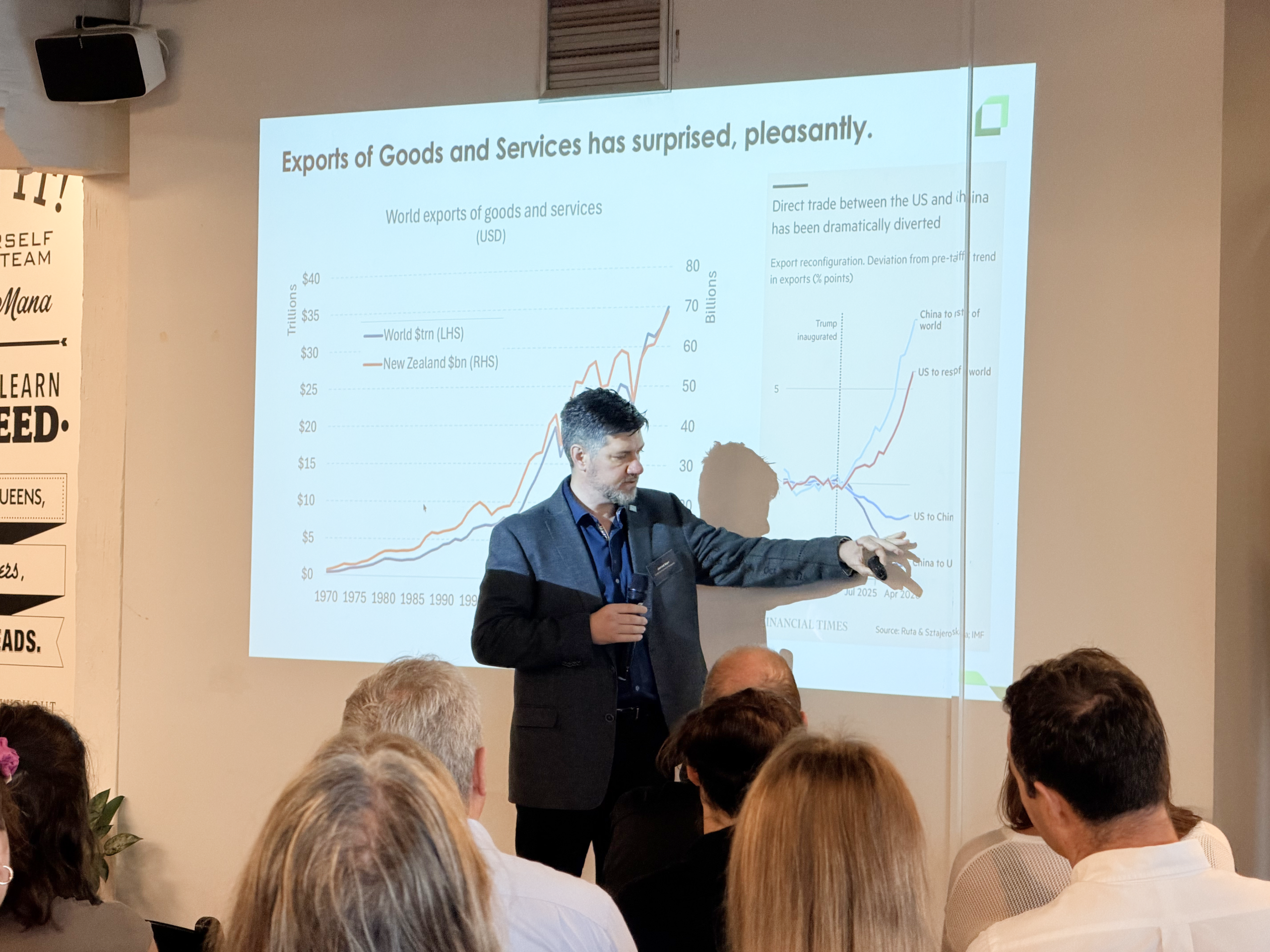
2. Global trade surprised everyone (including the economists).
Since the Great Financial Crisis of ’08, we have seen a persistent lift in anti-trade policies which saw globalisation go sideways. Most economists (Jarrod included) thought globalisation had stalled. Instead, global trade volumes have jumped.
What happened? The US put up tariffs, and the rest of the world simply went looking elsewhere. Trade between the US and China fell, but everyone else kept trading with each other.
Global growth for 2026 has come in stronger than forecast, and those forecasts are being upgraded for next year. For New Zealand, a small export nation at the bottom of the world, that matters.
It’s showing up in our commodity prices too. Meat is right at the top, with dairy, horticulture, forestry and aluminium all strong. Kiwi farmers and growers are doing really well.
3. The Kiwi dollar is helping, not hindering. But it’s inflationary.
Since our last update, the Kiwi dollar has fallen further against both the US and Australian dollars. For an export-driven nation like ours, that’s good news. We export a lot for the size of our economy, so a weaker currency gives our exporters a real boost. Many are paid in US dollars, so every sale converts into more New Zealand dollars.
Every Aussie dollar now buys about $1.25 Kiwi. There’s been a rise in Aussie tourism, as NZ is on a 25% discount to them. Tourism numbers are back to pre-Covid levels, and operators in Rotorua and Queenstown are seeing the visitors return, even if spending hasn’t quite caught up yet, and things should only get better into summer.
It’s not just tourism. New Zealand does a lot of manufacturing which never reaches shelves here and goes straight to Australia. The exchange rate has helped those businesses beat many of their competitors.
The flip side is that importers are having it rough. Bringing in goods is more expensive, and getting stock levels right for Christmas takes real precision. But on the export side, things are looking very good.
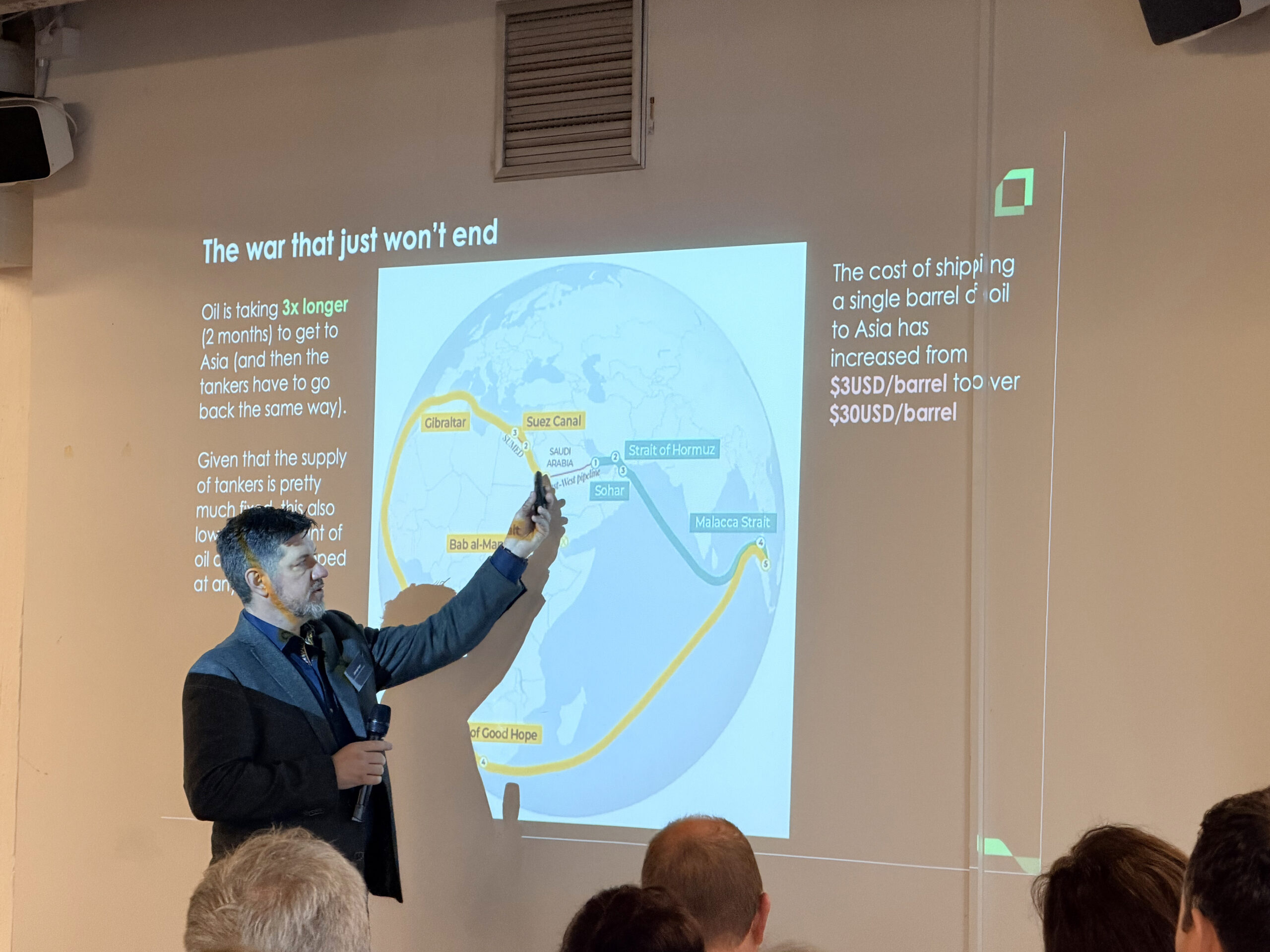
4. Oil is still flowing, just slower.
The Strait of Hormuz remains a pressure point, but there’s been some good news. More tankers are getting through, they’re just taking much longer. A journey that used to take three weeks now takes two months (and then two months back) as they sail around the African continent, instead of through the Indian Ocean, and the cost of shipping a barrel of oil to Asia has gone from around US$3 to over US$30.
As we heard in June, New Zealand is in a stronger position than most. We’re a wealthy country, and we can afford to keep paying higher prices while demand falls away in poorer economies. China, which built up huge oil reserves ahead of the conflict, has since run them down, saved itself billions, and is now importing oil again.
Oil prices have eased in the last few days, and Jarrod’s hope is that they settle somewhere in the US$80-90 range. They won’t go back to US$60, but stability alone would take a lot of inflationary pressure out of the system.
Here in New Zealand, we import refined oil. Higher shipping and refining costs are added on top, which is why the landed cost of diesel can be higher here even when the headline oil price hasn’t moved.
5. Interest rates: the worst may already be behind us.
Inflation has spiked to 3.7% and is likely to rise again this quarter on the back of oil prices, but economists are forecasting inflation to fall next year. That fall is the key to everything. Once inflation drops, we won’t need as many rate hikes, businesses will be in a much better headspace as their costs come down, and household incomes will be growing faster than prices. That’s the secret to ending the cost of living crisis.
The good news is that people still expect inflation to settle around 2%. In other words, they trust the Reserve Bank. Jarrod gives Governor Anna Breman credit for that, with her clear message that the bank will do whatever it takes to get inflation back to 2%.
So what does that mean for the OCR? After two hikes, the Reserve Bank held at its latest review. It’s signalled a cash rate of around 3% by the end of this year and 3.25% by the end of next year. That’s a very flat path, and one Kiwibank’s view sits close to. Some other banks have been calling for hikes to 4-4.5%, a level Jarrod believes would do real damage to a recovery that hasn’t properly got going yet.
Wholesale rates have already come down, and mortgage and lending rates should follow.
After a double-dip recession and four tough years, Jarrod’s view is simple: businesses need encouragement right now, not more pressure.

6. The banks are hungry to lend.
A few years ago, banks pulled back hard on lending. Now they’re competing fiercely for business, and it’s the biggest change in bank appetite in a while. Banks are back, “fired up” with their pencils sharpened, competing on conditions, not just price.
If you’ve got a project you’ve been sitting on, now’s a good time to have the conversation, and if your bank turned you down a couple of years ago, it might be a very different conversation today.
Kiwibank is anticipating a big lending year in 2027. Demand for credit is still soft, but the supply is there and growing.
7. The labour market: the last shoe has dropped.
The labour market is still catching up to two years of recession. Unemployment sits at 5.7%, employment growth is just 0.7%, and long-term unemployment has risen. Kiwis are still leaving for Australia in big numbers, and population growth has slowed to 0.7% – a long way from the 2% of the recent migration boom.
That’s weighing on consumers. Confidence is low, people are more worried about their jobs, and households are still squeezed. Businesses feel it too, many want to pass on rising costs, but customers are pushing back, postponing projects or walking away altogether.
That matches what we’re seeing at Consult. It’s a tough market for many candidates right now, and a more competitive one than it looks for employers chasing experienced people.
However, business confidence is turning, investment intentions are building, and the money is there to fund them. When hiring does pick up, it may move faster than people expect. The organisations that have kept in touch with the talent market will be the ones best placed to move when it does.
8. Everything gets better as you go south.
The picture looks very different depending on where you are. Christchurch is humming. The CBD is busy on a Tuesday night, there’s excitement about the new stadium and the rebuild, and people are arriving on one-way tickets. Jarrod shared that when he asked a room of around 200 Canterbury business people whether they were hiring, 40-50% said yes. A similar share is investing. Ask the same question in Wellington, and only eight hands went up.
Part of the story is farming. South Island farms tend to be larger, more efficient and carry less debt, so high commodity prices are going into maintenance, animal welfare and productivity rather than paying down loans.
The housing market tells the same story. National house prices are still down 1.5% year on year, with Auckland and Wellington soft, while Southland and Otago have lifted. Sales have picked up, but prices are yet to follow, and rents are now falling in Wellington, with Auckland likely to follow.
Looking ahead to 2027
Jarrod’s outlook is for a soft start to next year, with growth bouncing back through the second half of 2027 – much like the pattern we saw this year, but with a bit more momentum, because the banks are behind it this time.
The noise isn’t going away, however, inflation is expected to ease, rates are close to peaking, credit is flowing and businesses are ready to move.
Our Group CEO, Karly Boast, nicely summed it up in closing: “Growth comes down to what we do – we drive it forward and keep going.”
Here’s to a bit more optimism, a lot more action and getting on with it in 2027!
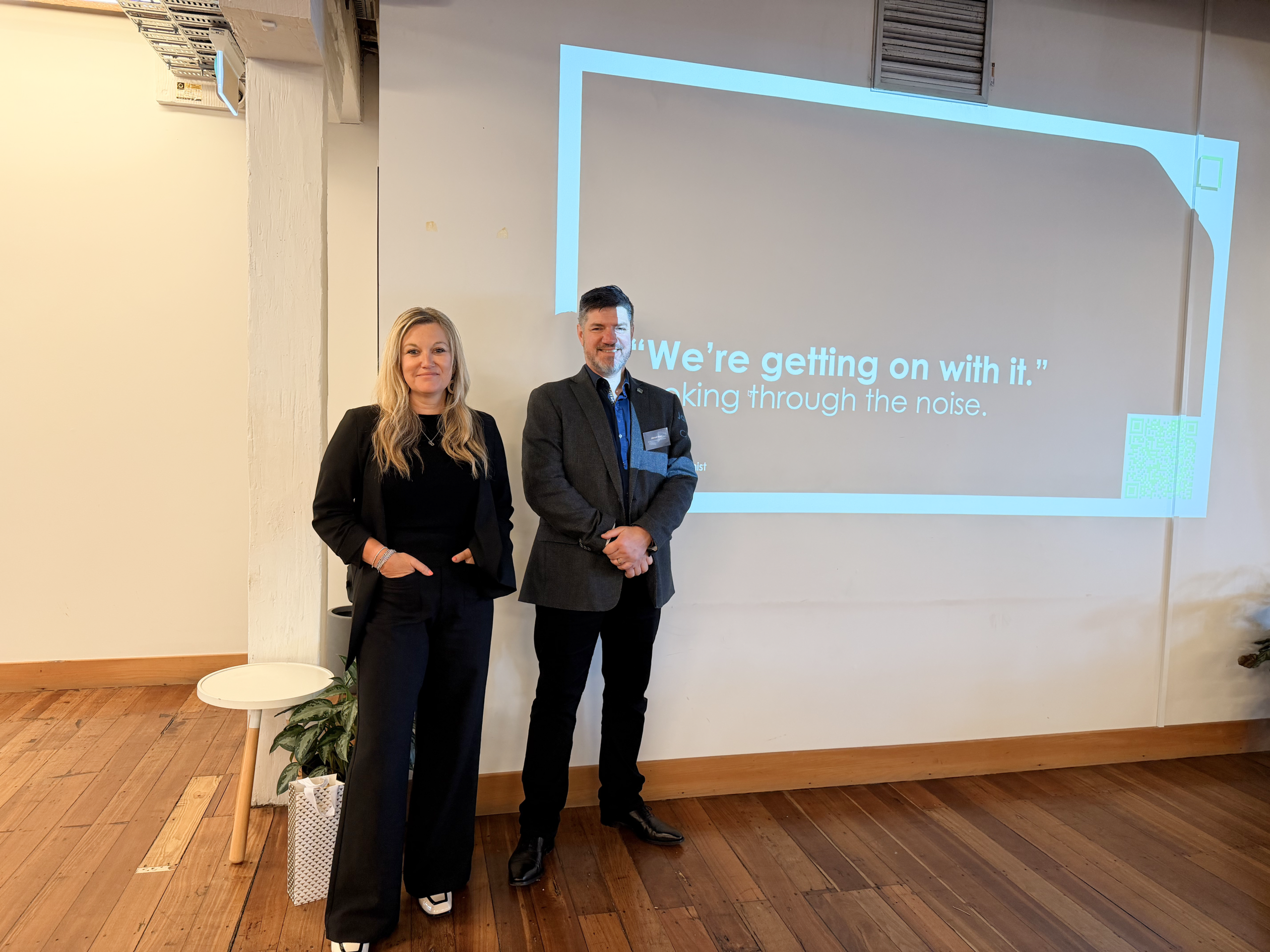
A big thank you to Jarrod & Kiwibank for another insightful, engaging and refreshingly pragmatic session, and for being such a generous guest across all three of our Economic breakfast updates this year. We look forward to having you back in the new year.
Thank you again to everyone who joined us bright and early for our breakfast session hosted by Consult Recruitment & LEAD Executive Search.
Follow us on LinkedIn to stay updated on future events, or reach out if you’d like to be part of the next one: info@consult.co.nz






We’re getting on with it. 2026 Economic Update with Jarrod Kerr, Kiwibank Chief Economist
This article was published with our partners, LEAD Executive Search. What a year it’s been. We’ve been privileged to have

Celebrating the 2026 Best Places to Work Organisations
Auckland, New Zealand: Hundreds of business leaders and teams from across New Zealand gathered on 22 October at Cordis Auckland

How to increase your chances of landing the job
Stop relying solely on your CV and skills. CVs are easier than ever to produce (hello AI), skills can be