
This article was published with our partners, LEAD Executive Search.
The last time Jarrod Kerr, Chief Economist at Kiwibank, joined us in February, his update was optimistic. Green shoots. Positive signals. A sense that the recovery was finally gaining traction.
A lot has changed since then, and as always, Jarrod was great at cutting through the noise and telling it like it is while leaving everyone feeling better informed to face what’s ahead.
Here are the key highlights from our 2026 Mid-Year Economic Update with Jarrod.

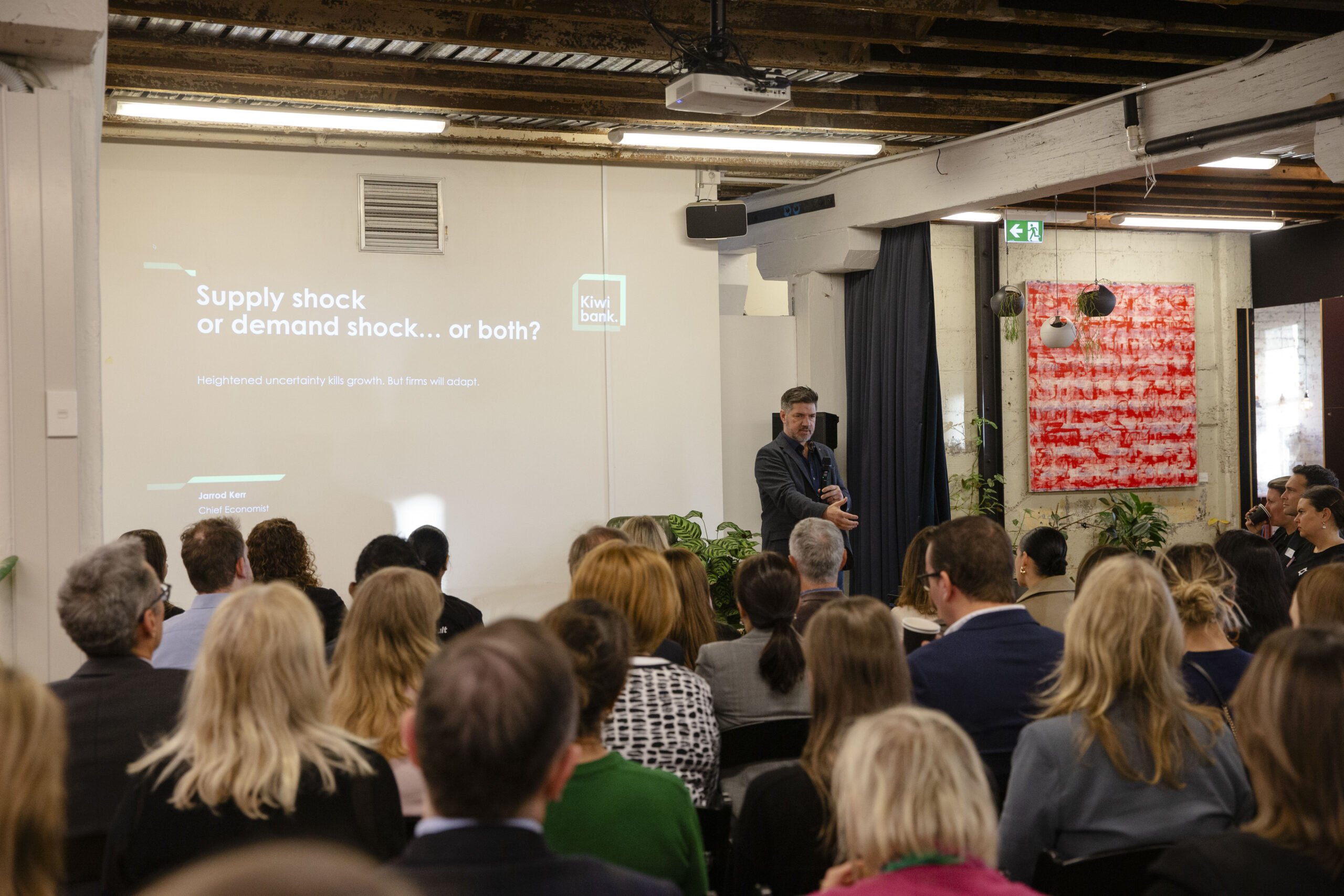
1. Supply shock or demand shock…. or both?
The big framing question for the session was: what are we actually dealing with right now? A supply shock, a demand shock, or both?
The conflict in the Middle East has disrupted oil supply through the Strait of Hormuz – a critical passage for roughly 30% of global seaborne oil trade. That’s the supply shock. But as oil prices spike, demand is being destroyed – particularly across parts of Asia and Africa where consumers simply can’t absorb the cost.
As a relatively wealthy nation, New Zealand is in a different position – we keep paying, but we cut back in other areas. It shows up in spending patterns, and it’s something Kiwibank is already seeing across their customer base. Jarrod sees this demand destruction as a pressure valve. When prices normalise, that demand destruction should resolve itself.
Interestingly, one country that hasn’t felt the same pressure is China. Having ramped up oil inventories massively through 2025, China is now estimated to hold more oil reserves than any other nation, well ahead of the US and Japan. Whether that’s strategic preparation or something more, either way, China is in a much better position than most and is actually reselling oil back into the market. And for us, that’s good news as China is one of New Zealand’s largest trading partners, and they’re doing just fine.
The key takeaway: this is a price problem more than a structural one. Uncomfortable right now, but not permanent.
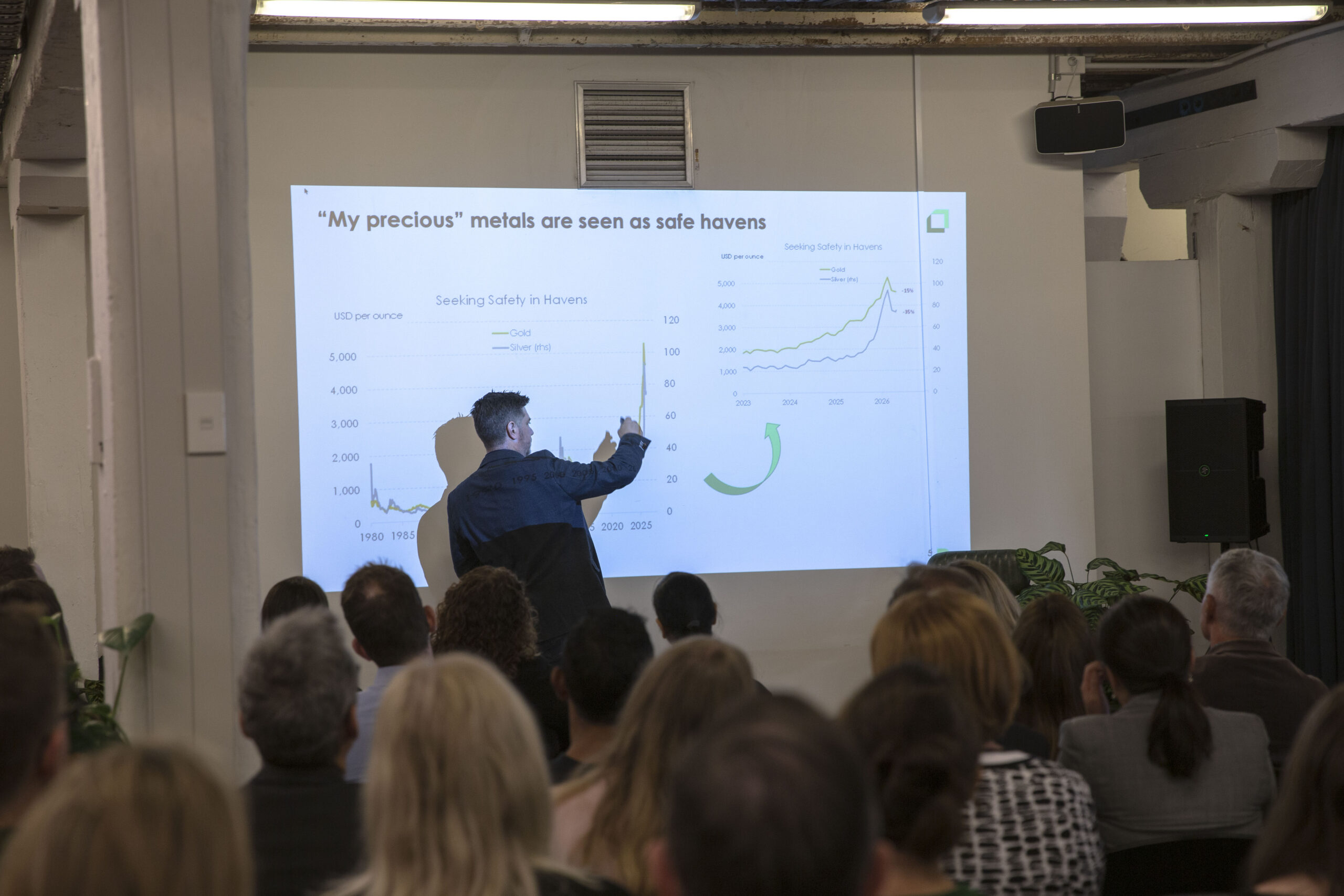
2. “My precious” metals are seen as safe havens.
With uncertainty running high, investors have been moving out of US dollars – not dumping them, but diversifying away from them. And gold has been the big winner. The price of gold has risen exponentially, driven first by central banks, then fund managers, then retail investors piling in. Silver has naturally followed.
But if people are losing faith in the dollar, where do they actually go? It’s harder than it sounds. The Euro has its own problems. Bitcoin hasn’t responded the way you’d expect (it’s not really functioning as a currency, more as a speculative asset). The Swiss Franc remains the go-to safe haven currency, and the BRICS currencies haven’t offered a credible alternative.
The honest answer is that the dollar still dominates – people are diversifying around the edges, not abandoning ship. But the fact that central banks globally are buying gold at record levels is a signal worth paying attention to.
3. The Kiwi dollar is helping, not hindering.
Amid all the uncertainty, there’s a quiet positive playing out in currency markets.
The New Zealand dollar has weakened against the Australian dollar – which is good news for exporters. As Jarrod put it: “New Zealand has just gone on sale for Australians. And it’s not a Briscoes sale – it’s a real sale. A genuine 20% off the entire country.”
Aussie tourists are our most reliable visitors through thick and thin, and with NZ now looking like great value, that spending is a genuine tailwind for the domestic economy. Exporters shipping into Australia are also benefitting from the currency differential.
Against the US dollar, the Kiwi has been relatively stable which means exporters into the US, even those dealing with tariffs, have had some offset from the currency move.
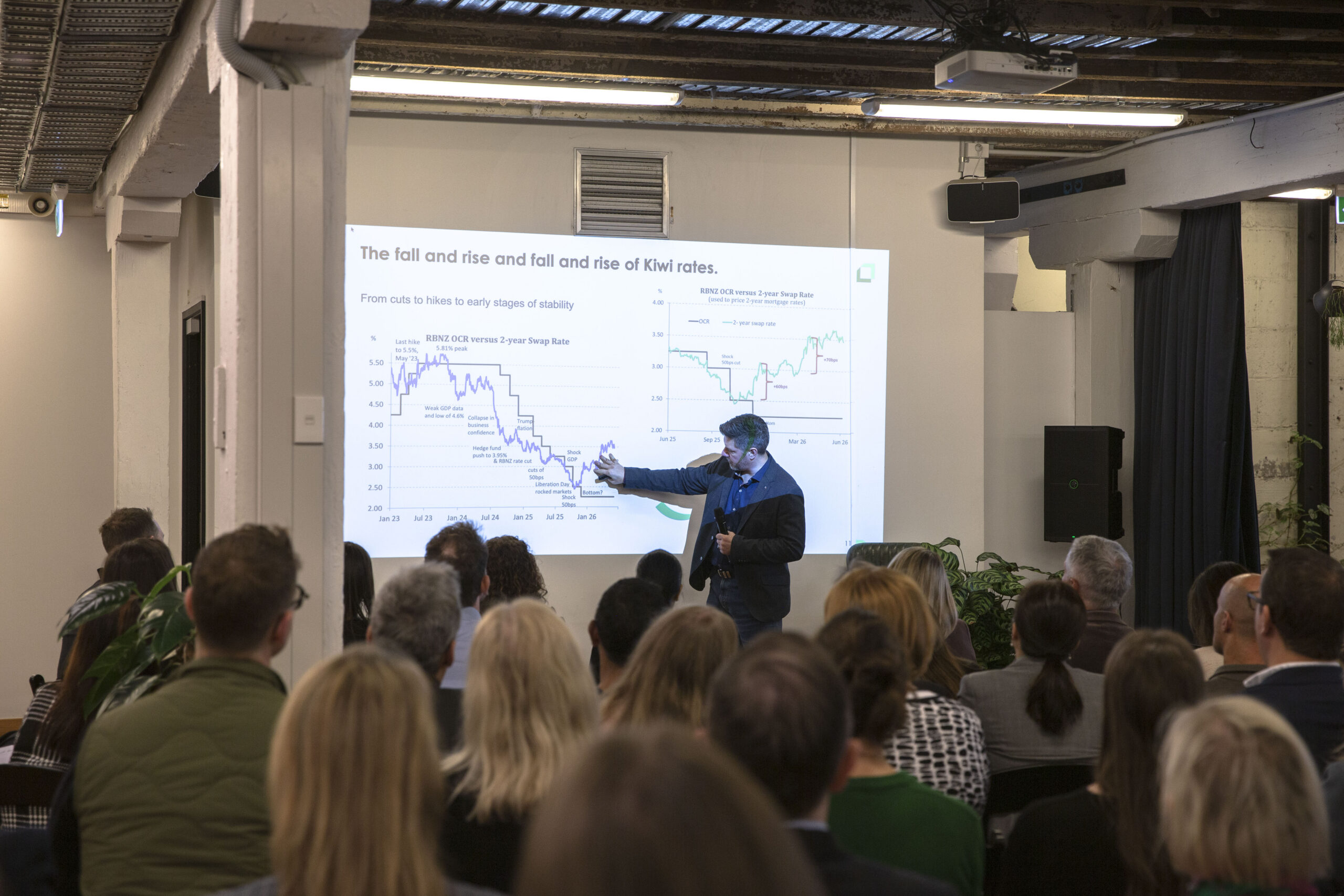
4. The OCR is heading up (and sooner than expected).
When Jarrod last visited in February, the conversation was still about rate cuts. Now, the Reserve Bank has signalled rate hikes as early as July, with markets already pricing in around 75 basis points of increases by year end. Jarrod’s view is that the RBNZ is placing too much weight on near-term inflation outcomes but as he put it, “you’ve got to play the institution, not the ball.”
The silver lining is that most of that movement has already been baked into fixed mortgage rates. So if you’ve locked in a two or three-year rate recently, you’re in a better position than you might think. The people most exposed are those on floating or very short-term fixes.
Kiwibank’s own forecast sees the OCR potentially reaching 3% (what they consider neutral) with further hikes only if the economy runs hotter than expected.
5. Inflation and the cost of living squeeze.
Inflation expectations have returned. Kiwi households are already feeling it in every weekly shop (butter is up 61%, instant coffee up 39%, and a block of chocolate up 30%) – and it’s putting pressure on households with less room to absorb rising costs.
The broader picture is that oil prices feeding into transport and shipping costs are flowing through the entire economy. Every business that moves goods is passing costs on, and at some point that chain hits the consumer. The good news is that inflation expectations, while a little elevated, are still within the RBNZ’s 1-3% target band – and Kiwibank expects them to ease as oil prices stabilise.
6. Business confidence is fragile but investment intentions matter.
Business confidence had been building strongly at the start of 2026 – both investment intentions and employment intentions were moving in a positive direction. Then the Iran conflict hit, and uncertainty crept back in. When your input costs spike and your selling prices can’t keep up, thoughts about hiring and investing get put on hold fast.
But Jarrod was clear this is a temporary response. The underlying demand for investment is there. Businesses have stuff to do. When the noise settles, those intentions will bounce back – and that bounce is what will signal a genuine recovery.
The good news is the housing market appears to have bottomed out, credit availability is improving (with lower test rates) and banks are genuinely competing for good clients again, something that wasn’t happening through 2023 and 2024. Lower test rates mean more people and businesses can access credit, and that availability is only expected to improve from here.
Credit is the oil in the economic engine, and it’s flowing again. While the demand for credit remains soft, it is expected to bounce with rate cuts… And intentions to invest are key to the 2026 recovery.
7. The labour market and the “Aussie pull”
The labour market is catching up to two years of recession. New Zealand’s unemployment and underutilisation rates are both running well above Australia’s. When you’ve got no job, or not enough hours, it doesn’t matter how much you love this country. If there’s work across the Tasman, you go.
Kiwis are leaving in record numbers, and it’s putting real pressure on the local labour market – particularly at the mid-level where skills shortages were already biting. The flow of new arrivals from the UK, US and Ireland has helped plug some gaps, but not all of them. As conditions stabilise, the pull to leave should ease.
This rings true to what we’re seeing in the recruitment market too. The talent pipeline out of New Zealand remains a live challenge. Don’t assume the market is easier than it looks. Move quickly on the right people, and if you need support, working with a specialist recruitment partner can make all the difference in securing the best candidates before someone else does.
8. Businesses are remarkable at adapting – and that’s the real story.
“No matter how bad things get, I always remind myself that businesses are remarkable at adapting to these shocks.”
Many people and businesses are already pivoting, already finding ways through. The construction client navigating diesel levies. The exporter rerouting supply chains. The finance team renegotiating contracts.
The economic picture is genuinely complex right now. But complexity isn’t the same as collapse. As Jarrod closed: “The sky isn’t falling. It’s just raining.”
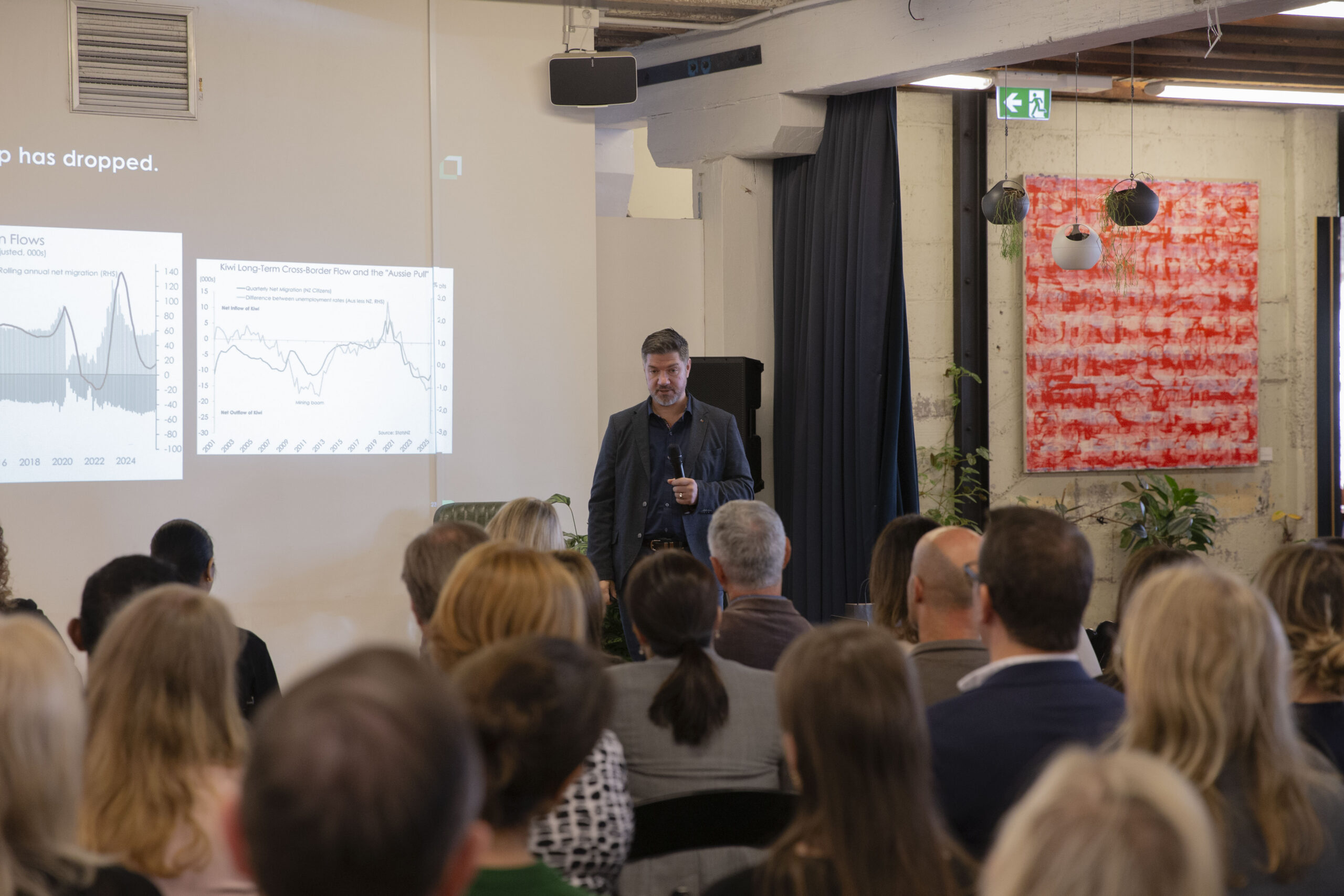
We’d like to thank Jarrod Kerr for another brilliant and insightful honest session. And thank you to everyone who joined us bright and early for our breakfast session hosted by Consult Recruitment & LEAD Executive Search.
Follow us on LinkedIn to stay updated on future events, or reach out if you’d like to be part of the next one: info@consult.co.nz





August 2026 Recruitment Market Update
Welcome to our quarterly recruitment market update. One month into my new CEO role at Consult, and this market is
Supply shock, demand shock, or both? 2026 Mid-Year Economic Update with Jarrod Kerr, Kiwibank Chief Economist
This article was published with our partners, LEAD Executive Search. The last time Jarrod Kerr, Chief Economist at Kiwibank, joined

2026 NZ CFO Symposium highlights: Inside the minds of NZ’s Senior Finance Leaders
This article was published with our partners, LEAD Executive Search. It was great to be back at the NZ CFO